
AI Slop Might Be the Beginning, Not the End
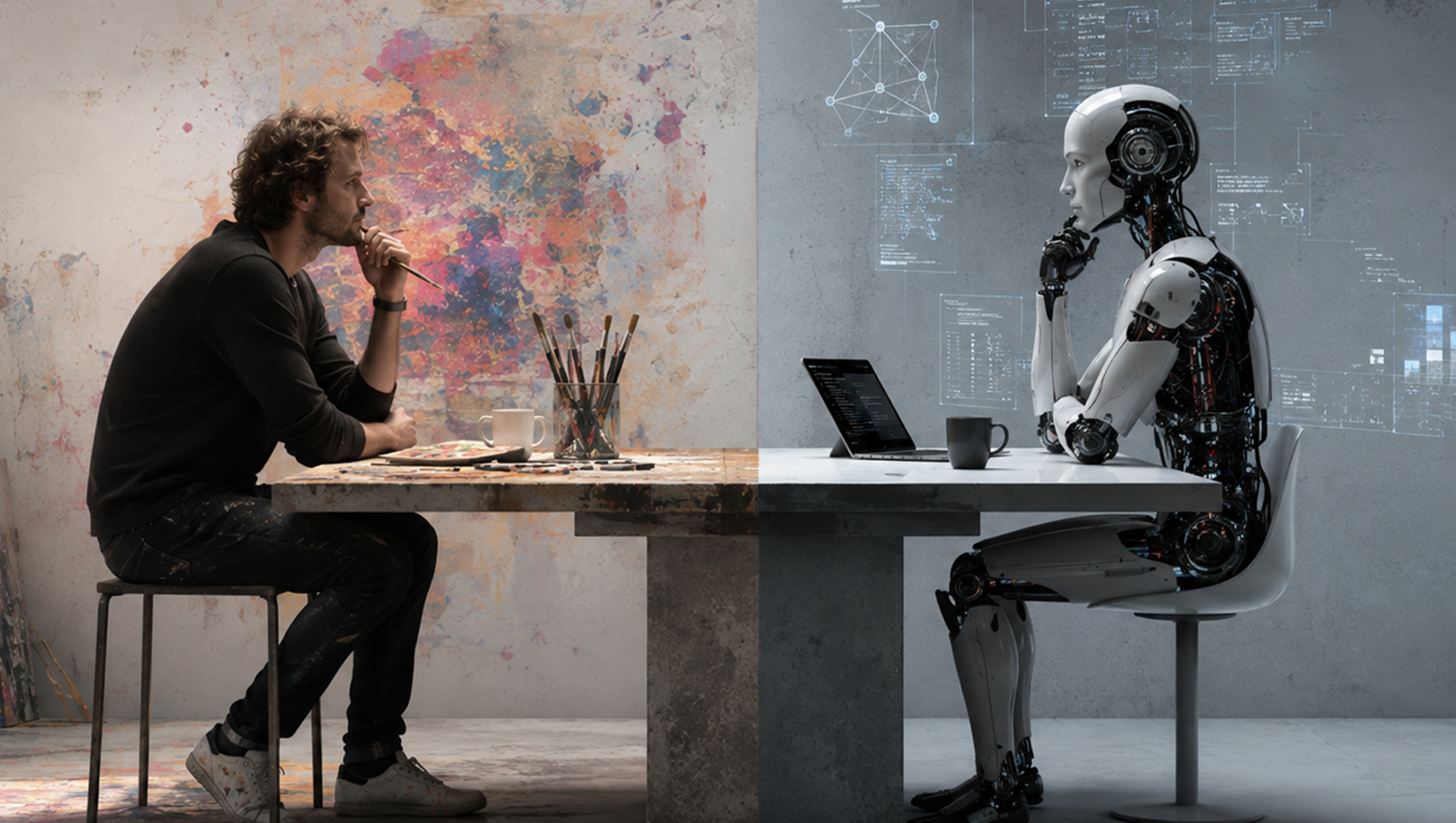
“AI slop” is a strangely emotional phrase.
We do not call mass-produced furniture “furniture slop” or forgettable advertising “campaign slop.” Yet when someone generates a generic image, video or piece of writing with AI, the language quickly becomes visceral. Slop. Something cheap, careless and barely fit for consumption.
It reveals something important about how people currently see the technology. The anxiety is not simply that AI can produce content. It is that AI might flatten creativity into an endless supply of anonymous, interchangeable output. Creative work without an author. Style without intent. Culture produced as a commodity.
But we have been here before.
When photography arrived in the nineteenth century, many artists saw it as a violation of something sacred. A machine could suddenly reproduce reality faster and more accurately than any painter. If the purpose of art was to capture the world as it appeared, how could humans compete with a camera?
They could not.
So they stopped trying.
Instead, artists began asking better questions. If a camera could capture reality, what else could a painting do? Could it capture light, movement, memory, emotion or the feeling of a moment rather than its precise appearance?
Those questions helped give rise to Impressionism, one of the most influential creative movements in history.
Photography did not end art. It raised the baseline of what technology could reproduce, forcing artists to move somewhere more interesting.
AI may be creating a similar pressure now.
Technology has always compressed parts of culture into systems, formulas and repeatable processes. The camera compressed realistic representation. Recorded music compressed live performance. Digital software compressed many of the technical barriers involved in design, editing and production.
Each time, people feared the tool would reduce human creativity. Often, the opposite happened. Once the technical baseline became more accessible, culture expanded in directions the technology could not predict on its own.
Agentic AI will accelerate this even further. For the first time, personal data may have an intelligent place to go. An agent could understand your beliefs, preferences, habits and ambitions, then help you navigate an overwhelming volume of information. It could read your health data, organise your work and adapt itself around the way you see the world.
AI becomes the scuba gear that allows us to move through an ocean of data that was previously too deep to explore.
But scuba gear does not decide where to swim.
AI can raise the base. It can make competent production faster, cheaper and more widely available. What it cannot automatically provide is the thing that makes creative work worth caring about: human intuition, point of view, style and taste.
That is where we see Made By Humans playing a meaningful role.
Our job is not simply to help brands produce more content with AI. It is to combine the possibilities of the technology with directors, artists and producers who know what is worth making in the first place. To bring judgement to the process. To protect the idea. To use AI as a creative material rather than a shortcut around creativity.
The opportunity is not to compete with the machine at what it does best. It is to combine what it can do with what humans do differently: imagine, feel, edit, provoke and choose.
We may not be staring at the end of creativity. We may be standing on the cliff edge of its next explosion.
The best years could still be ahead of us, provided we stay curious enough to ask better questions—and human enough to know which answers matter.
