
Peek Under the Hood on Autotrader’s Fleet of New AI Ads
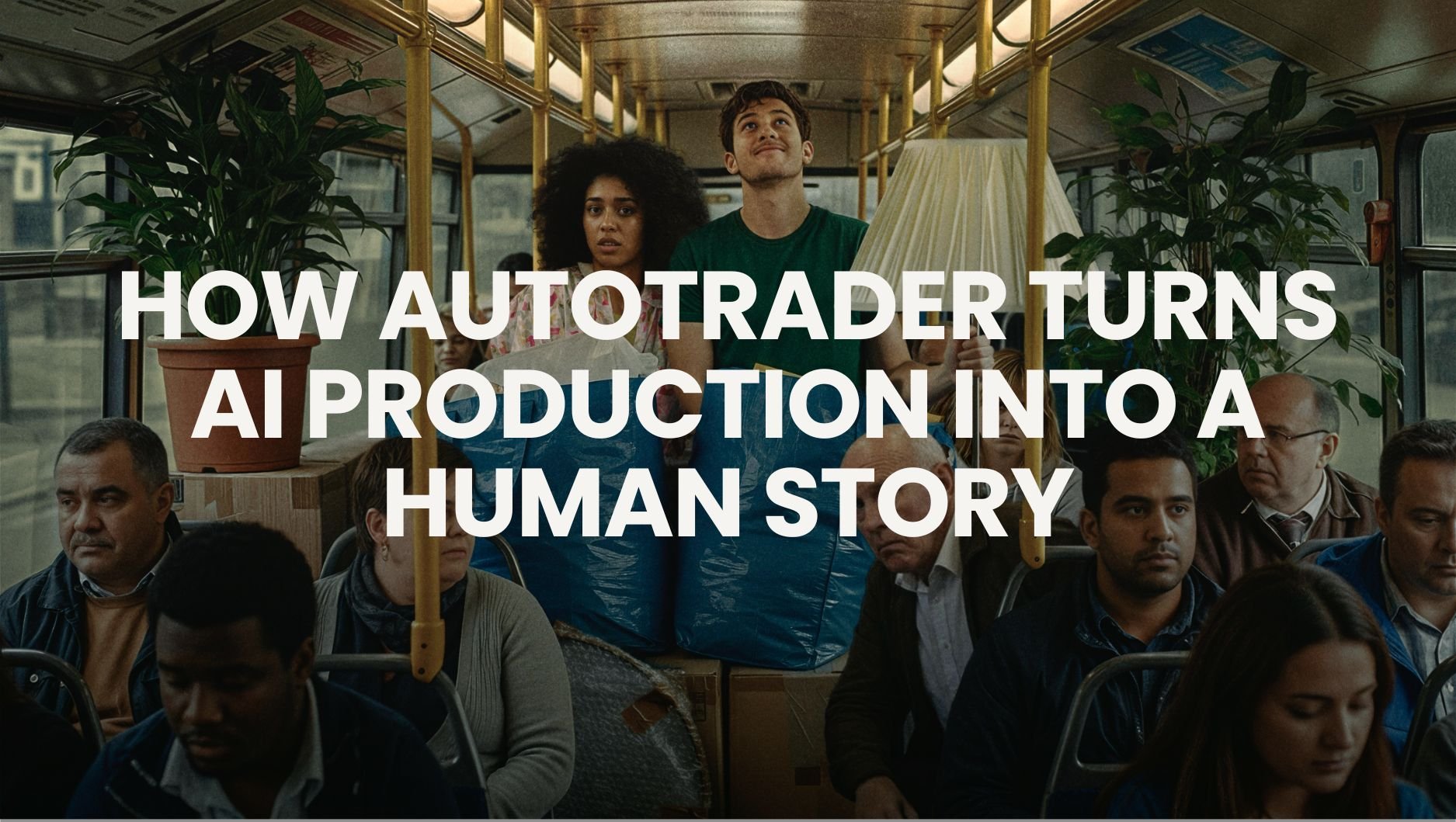
When Leeds-based agency IMA won the Autotrader account in March, they had one goal for the UK’s largest digital automotive platform. To put it front of mind and the obvious choice for anyone looking to buy a car. To do that, they needed it to connect emotionally, taking a category that’s associated with all things cold, metallic and mechanical and to turn it into something very human. And to do that they took a surprising left turn: they used artificial intelligence.
The crux of the idea is to position Autotrader as the auto-matic go-to whenever you need to buy a car, as Ben Ducker ECD at IMA explains.
“Our challenge was how do you help the market leader remain the market leader in a world where competition – Cinch and the like – are growing rapidly, particularly with the 25-to-35 year old younger demographic. It’s all based on ease, on simplicity. Obviously it’s still tech first. We looked at those traits and actually, you guys are about getting it right. A car purchase, like a holiday, like a house, is a big ticket item. You need to get it right,” says Ben. “We don’t need to talk about the functional benefits, the brand needs to resonate emotionally. It’s an awareness-driving brand platform piece to begin with. In order to build salience and emotional equity with the consumer, we needed to position the brand in a way that was flexible, and create consistency at the heart of it.”
In order to do that, the team needed to present a decent volume of scenarios so that people could get a real feel for how all-encompassing and ever-ready the platform is. One new execution every year wasn’t going to cut it. Essentially, they needed to speed-run a ‘Should Have Gone to Specsavers’ in the national consciousness.
That’s where the IMA team suspected AI might give them a little more bang for their production buck. In order to demonstrate the breadth and flexibility of the new platform they would need to demonstrate multiple scenarios in film and in still imagery. Ordinarily, their budget and short timeframe might have allowed them to execute one-and-a-half TV ads; the new campaign launches with six still ads and three videos.

Persuading their Autotrader client to jump into an AI experiment was fairly straightforward. While it’s a brand that the public may associate with mechanics and car nuts and its long-shuttered print magazine, these days it's a highly tech-forward, innovative digital business.
Emily Huyton is business director at IMA. She recalls being wowed by their enthusiasm for trying new ways of working. “You’re going into this Silicon Valley-esque, tech-centric brand, but actually as a result of a digital product being at the heart of that business, they are actually really in favour of agile sprint ways of working, so a long, waterfall, chronological process sort of went against the energy of that business,” she says.
“There’s freedom to fail, freedom to get something out and figure it out as we go. They were so receptive to linking arms with us and going ’we’ve never done AI before, neither have you guys’. We did as much managing expectations up front and I was very diligent about getting together pros and cons of approaches, and they were like, ‘let’s just go’.”
When it came to selecting a partner to bring this ambitious AI project to life, Ben turned to the team at Made By Humans. He had a relationship with co-founder and EP Toby Walsham, which stretched back to the days when Ben was a creative at VCCP and Toby a VFX producer at Framestore. The AI production space can, says Ben feel a bit like a "Wild West" at times, so Made By Humans reputation and experience as one of the first independent commercial production companies also stood out. That was all important as this job wouldn’t rely on the usual spectacle and absurdity associated with AI video. The films needed to be subtle, emotional, and human, which is still a real challenge for AI filmmakers, particularly those with little experience.
AI production, as opposed to live action or even traditional or CG animation could, in the wrong hands, turn into something of a black box. A script goes in, a film pops out. In order to make sure that the films and stills met the clients’ exact needs, that they were executed to the highest standard and that there was space for communication, the teams at IMA and Made By Humans made sure to replicate those workflows and milestones that would be familiar from a traditional shoot process.
Breaking down the production journey, so much is familiar. There’s casting, there’s location scouting, wardrobe, it’s just that instead of presenting real places or people, they’re AI generated. What does this character look like if he’s bald? Tall? Skinny? Tired?
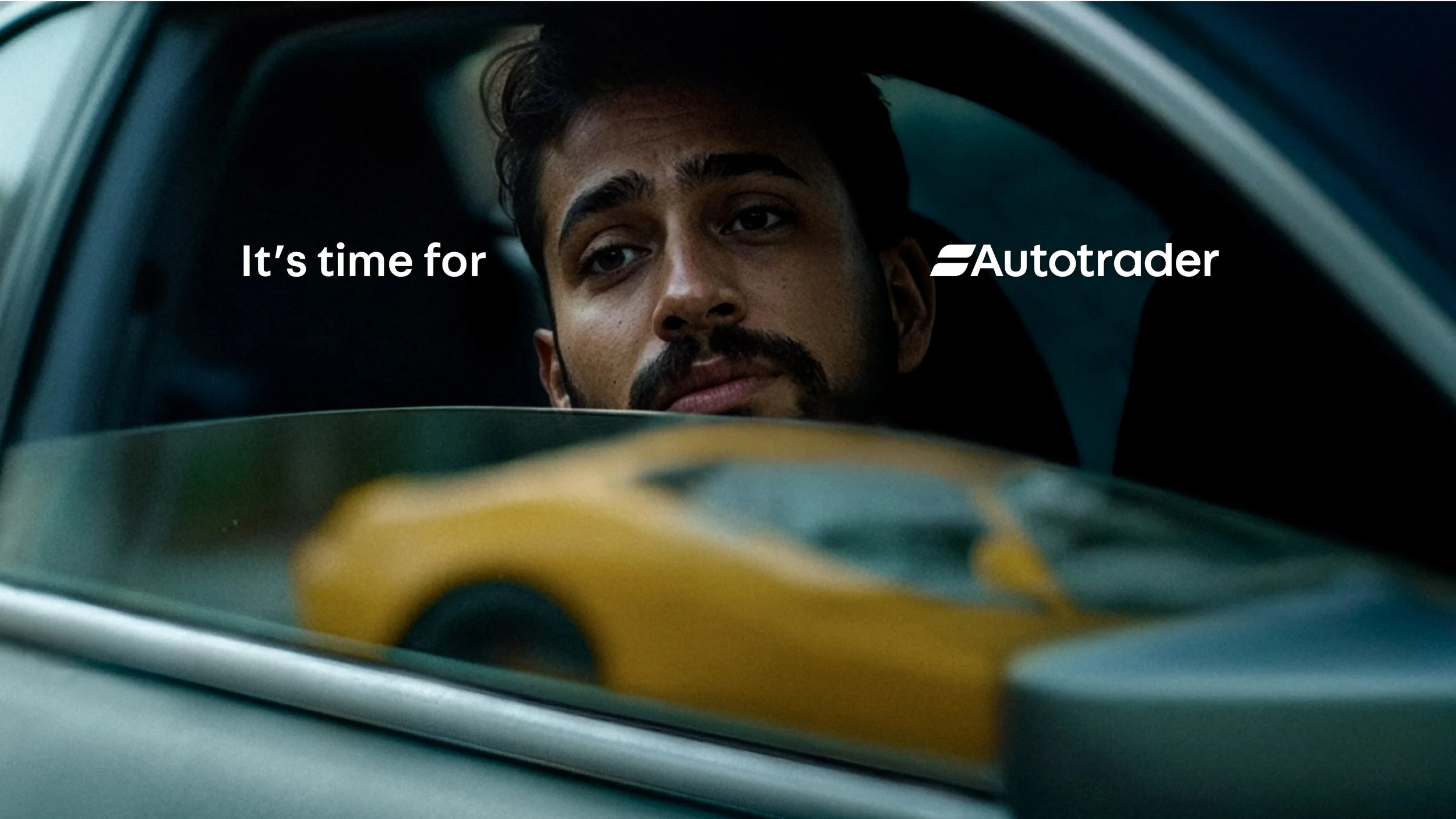
“We took the workflow that clients understand, so we would do casting and location scouts, but it would just be in AI. The difference is that we don’t do the shoot aspects but we take everyone along on a traditional journey so that it feels familiar and feels comfortable. Obviously it’s a brave new world so there are changes within that,” says Ben.
That transparency and collaboration between production, agency and, of course, client is key to how Made By Humans works, says Toby. “There are a lot of AI companies out there right now where you pass a script and a budget and they come back to you with a film. But we work in advertising and everyone’s got a bit of feedback,” he says. “Even if something’s perfect, clients will have something to say. That’s part of this world that we live in. We’ve known that for many years of being in this space. So when we launched Made By Humans, it was very intentional to set it up to feel really familiar in its process. That’s why we do all of those markers that are very traditional.”
What also becomes apparent is that the ads are not created solely in AI or with just one AI tool. Workflows are complex, with different tools and platforms pulled in to perform different tasks – and indeed for some tasks, non-AI tools are superior. Again, this subverts common perceptions about what AI production really looks like. To get the best outcome, you don’t just lob some prompts into one platform. Tools and techniques are layered and communication and check-ins are key.
Guy Soulsby, co-founder and creative director at Made By Humans, was the director on the project. He points out, for example, that visual gen AI tools are still quite unreliable when it comes to text, so when it came to adding signage into the scene or getting rid of random AI artefacts, they’d turn to traditional VFX for a bit of clean up.
“But that’s no different to a normal shoot where you’d have something in the background and in the edit I’d say ‘I don’t like that, can we paint it out?’,” he says. “We as a business – and I’m sure IMA would agree – are about delivering the highest quality thing.This isn’t just taking the first prompt out of a tool, in the same way we don’t post raw footage to TV, right? There’s the edit, there’s VFX. We still have a process involved.”
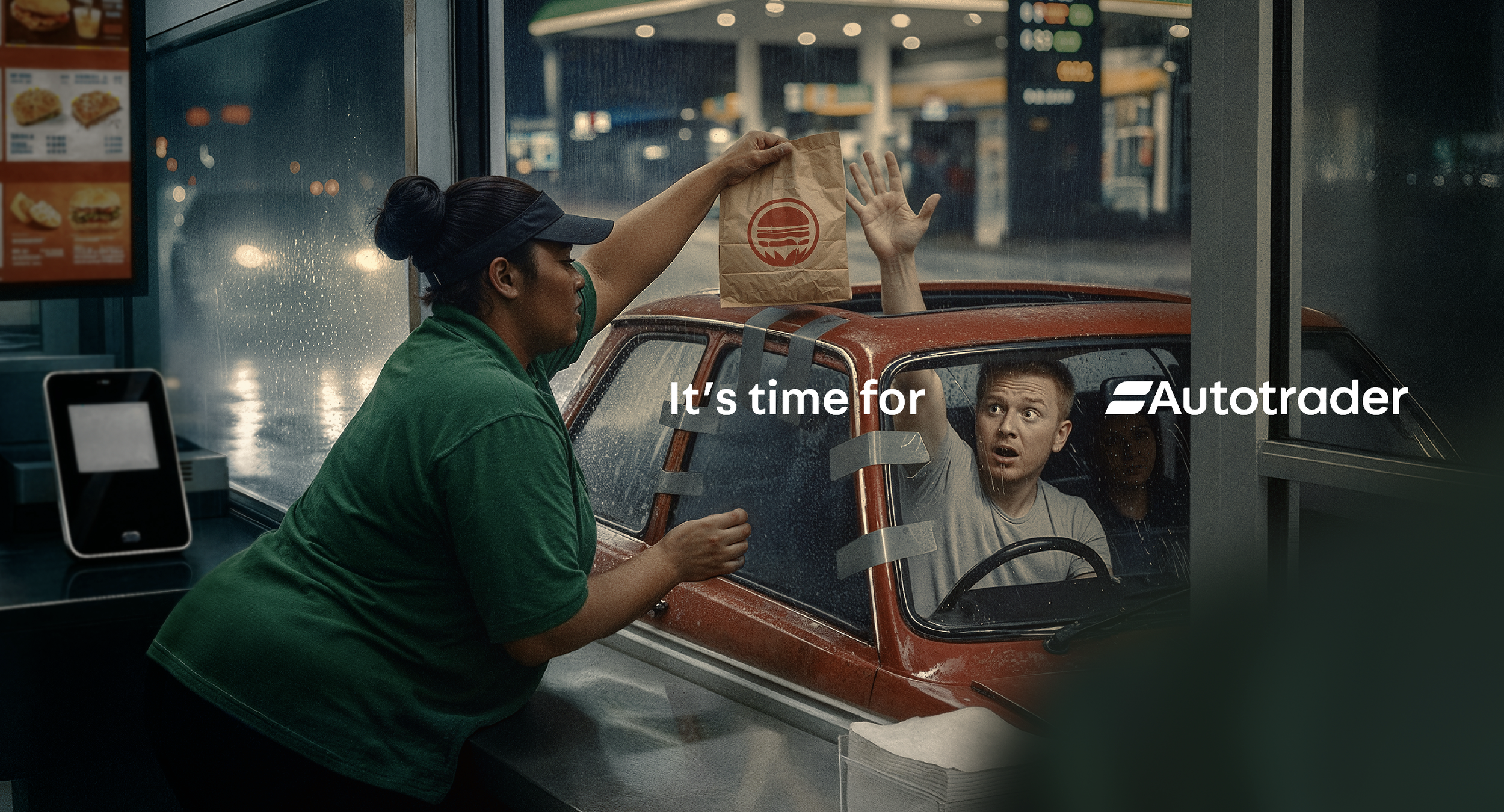
Guy explains that the performances were created and refined by acting out tests for what they were after and using language-based prompts to describe them – they found that some AI platforms were more successful and others were very much not so. But he explains that the act of refining the performances by rewriting and tweaking prompts wasn’t unlike doing 20 takes with an actor, which also usually ends up with a lot of footage “on the cutting room floor”. Guy says that an alternative approach, which they didn’t use in this project, might be to use an AI motion capture app like Act Two.
Ultimately, he describes the process of directing the spots and creating the still imagery as “human-AI collaboration”. Many of the considerations and challenges are exactly the same as those a live action or animation director would have to tackle.
“In terms of understanding the composition, the timing of the shots to get that comedy across, the framing, obviously that’s a human reaction as well, but all of these things are working together to get across that sense, not laugh-out-loud funny but that smile in the mind that we were trying to achieve in order to build brand warmth in a category that isn’t particularly warm,” says Guy.
The real difficulty with this campaign was to create performances that were amusing and connected emotionally. Comedy is tough enough in live action, but the team was dealing with a low-key wry humour in AI, which was a next level challenge.
“It’s very hard in this because the humour isn’t silly slapstick gags. It’s very subtle nuances as well. So it was a big challenge to get that,” says Ben. “On set, to get these subtle human moments is challenging with actors. So to achieve it in AI was an even bigger challenge. But that’s why it was really interesting working in different ways, not only live action shooting ourselves but working with language, different platforms to achieve the results.”
Where AI really unlocks for clients is that they’re not limited to a set number of shoot days, and reshoots don’t require clients to stump up thousands and thousands to bring back the actors, crews and kit. This is, however, something of a monkey’s paw. If there are no limits, where do you stop? And how do you enforce a cut off when stakeholders know that it’s kind of a fake limit?
“I remember saying to the client, ‘ok, let’s imagine we’re on set and we’re doing a shot and we’ve got a producer with a shot list chipping at our heels saying, “we’ve really got to move on or we’re getting kicked out of the studio”’,” says Emily. “There comes a point where you’ve got to say we’ve got what we’ve got… we did have to try and mirror some of that mentality just to keep us on track because it’s a bit of an indulgence to just go again and again.”
Nonetheless, that flexibility meant that if a creative or client did realise they needed a close up shot or a different angle, it wasn’t impossibly difficult to go in and make those changes. However, it also requires much more discipline too.
Ben reflects, “We asked the client what they liked most about working in the AI process and it was exactly that: the ability to feel like you’re not in a corner in the edit and there’s no real room for manoeuvre. Obviously that comes with its pain point because otherwise you’re forever in production and re-touching. While that’s great freedom and flexibility, it does mean that the AI process has to be even more controlled in navigation and communication…. Otherwise how long is a piece of string?”
With three films and six stills executions out the door just seven months after pitching for the Autotrader client, the experience has given the team at IMA a much-valued crash course in AI. “We are as a business really embracing AI holistically through our whole business infrastructure,” says Emily. “Our leadership team are very much recognising that AI is here to stay but it’s about supercharging, not necessarily replacing elements. It’s another tool, it’s another weapon of choice, so to speak.”
But for all the technological experimentation that comes with every AI production, especially now when updates and new tools are being launched all the time and the ‘rules’ of AI filmmaking are being written in realtime, at its heart Toby and Guy say, this is ultimately still a story about storytelling and craft.
“When clients start to go along on that journey with us, they go, ok, this is still a handcrafted thing, it’s just using AI,” says Toby. “This is still filmmaking, it’s just that our lens is AI rather than glass.”
READ THE ARTICLE here
Credits:
Brand: AutoTrader
Agency/Creative: IMA Account Director: Ben Ducker Account Director: Emily Huyton Account Director: Dan Veal Account Director: Becky Milsted
Production: Made By Humans Creative Director Guy Soulsby Executive Producer Toby Walsham Line Producer Jack Beardsley
AI Lead: Guy Soulsby
AI Artists Niels Thomsen, Max Larsson, Forty Below, Sard.Visuals, Jesus Plaza
Editorial: Pete Fullarton
Music & Sound: TwoAM